When is an interesting subject line just clickbait?
The workshop question I got pushed back on. Where is the line anyway?
 James
James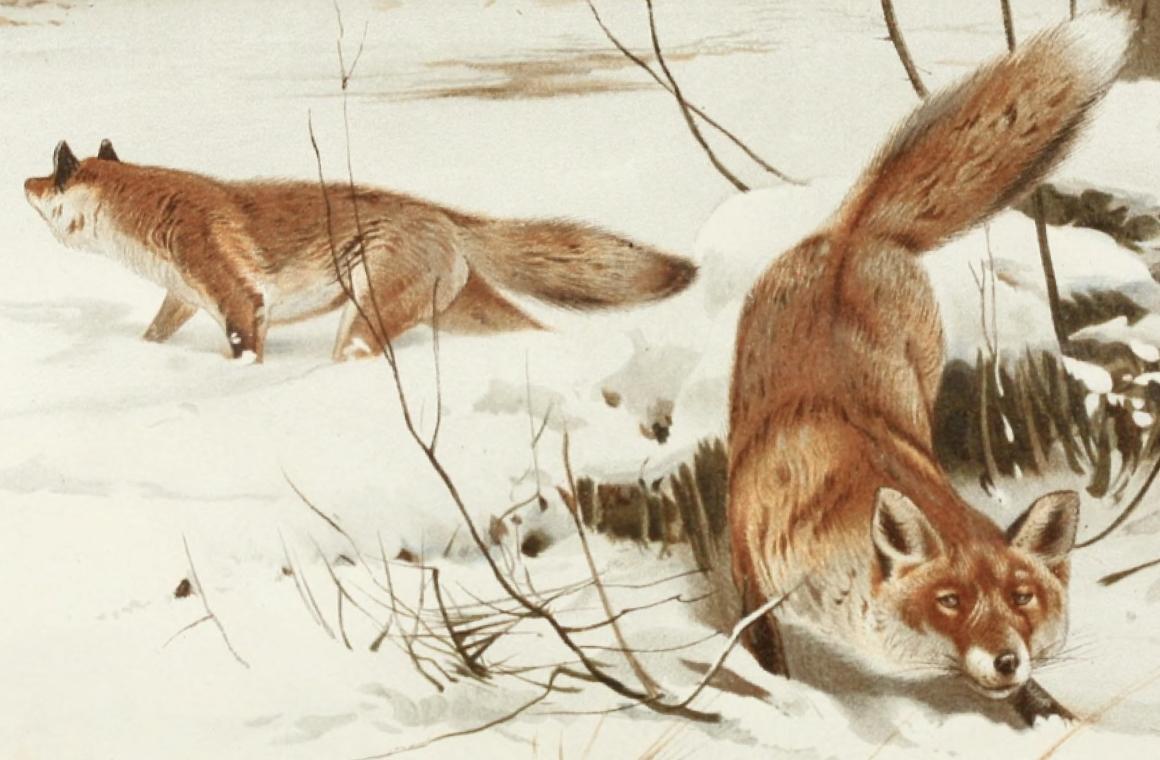
Curiosity is, in great and generous minds, the first passion and the last.
— Samuel Johnson (English writer and lexicographer)
This week I ran a workshop on email marketing for charities.
A big mix of people signed up — from school uniform banks, hospices, carers' centres, heritage trusts, dance companies, and an orangutan society.
I was blown away by the interest, and while I was speaking, the chat in the side-panel started to get busy with questions and ideas.
Good question!
The questions were often far sharper than the slides I was presenting… And one of the questions was a straight up disagreement with something I'd suggested. Gasp!
In a weird way, I found this all quite reassuring — you only get questions and disagreement from an audience thinking hard and listening — instead of vacantly nodding along.
The chat was so good I thought it'd make a great foundation for the next few weeks of this newsletter.
And I want to start with the disagreement, because it's the one I've thought about most since. I've had a little time to ponder, so I can hopefully answer it with a little more depth than my frantic multi-tasking on Tuesday.
If you're one of the many who joined us from that session: welcome! This is the EcoSend weekly newsletter, and (unless I mess up) it will hit your inbox every Friday.
"When is an interesting subject line just clickbait?"
I suggested a few spicy subject line ideas that I didn't really caveat enough.
A couple of the comments:
- "I'd be wary of a curious subject line in case they seem too gimmicky or like marketing."
- "That "Can we ask you something awkward?" line felt like trying to trick people into opening."
- "Mission-driven organisations should hold themselves to a higher standard even if it means our marketing might not be quite as effective as private sector counterparts."
Aim for curiosity, but only if it makes sense for your organisation
When writing subject lines I often want to spark curiosity — not clickbait. They aren't the same thing. The real test is what happens after the recipient opens the email.
Clickbait is often a trick — it creates a gap for the recipient that it doesn't close.
"You won't believe what happened next!" — this is often a promise with nothing behind it. The reader knows within seconds that they've been had! I'd argue that most readers are now so attuned to these tactics that they have the opposite effect and should be avoided at all costs.
Curiosity is different, though.
Honesty is the best policy
I gave an example of a subject line that works: "We nearly lost the barn owls". It's a specific and true subject line. And crucially the email delivered exactly the thing it dangled.
Nobody feels tricked, because nobody was.
For me, the test is: "will the recipient feel misled once they open this?" If the email content delivers on the promise of the subject line, it's just a good sentence — it's not clickbait. It just might not be for everyone.
Many people on the call suggested charities should hold a higher standard. At EcoSend we really want everyone to hold themselves to a higher standard. The big red line is honesty.
Watch your language!
Whether you think it's clickbait or curiosity, the language might not be for everyone. Some organisations will want to steer into far safer waters.
A subject line like "February Newsletter" isn't going to trick anyone. But it could miss an opportunity to encourage opens. It isn't any more ethical than "We nearly lost the barn owls". It's just less playful, and less of a tease. And those might be categorically inappropriate goals for the written communication of your organisation.
As was suggested in the chat — one idea is to use the subject line to be clear about what the email is, and use the preview text to carry the hook. Clarity and curiosity in sequence, rather than fighting in the same subject line.
Try it now
Write your next subject line and preview text. Then ask: if the recipient opens, will they feel the email kept its promise? If yes, send it. If you hesitate, you've got a problem — maybe it's the subject line or maybe it's the content. So take another look and ask again until you can confidently say yes.
Then hit reply and send it to me. I'd love to see the ones you're not sure about — the borderline cases are far more interesting than the safe ones, and I'll share the best of them in a future edition.
And if you were in the room on Tuesday: pick the one thing you wrote down and do it this week. I said I'd check in a month from now to ask how you got on, and I meant it!
There were plenty more good questions from that session — on how many calls to action a newsletter can carry, how to get clicks out of a plain email, and what to do with a mailing list you've inherited and know nothing about. I'll get to those over the coming weeks.
If you're not yet using EcoSend, you can get started completely for free, with no billing details or commitment required. Or have a play with our free email builder without signing up at all.
Until next time,
James
P.S. Huge thanks to Ross, Marie, and the team at Third Sector Lab for inviting me to run the workshop. Watch the full workshop for free if you missed it. They are doing amazing work — if you work at a charity and want to develop your digital skills, go and check them out.
The illustration at the top of this edition is titled Common Fox, painted by Wilhelm Kuhnert for The Royal Natural History, edited by Richard Lydekker (London: Frederick Warne, 1893–1896). Kuhnert had a reputation for going and looking: rather than working from skins and stuffed specimens in a studio, as many of his contemporaries did, he travelled to paint animals in the places they actually lived. Foxes are also known for being rather curious and cunning — much like our topic today. Public domain, via the Biodiversity Heritage Library.
The newsletter for purpose-driven marketers
Join hundreds of marketers getting weekly insights on ethical email marketing, sustainable growth, and responsible digital practices.
Unsubscribe anytime. No spam. No nonsense.