Don't delete anyone yet
You've inherited a mailing list of thousands and nobody knows where any of them came from. Here's the order in which to sort it.
 James
James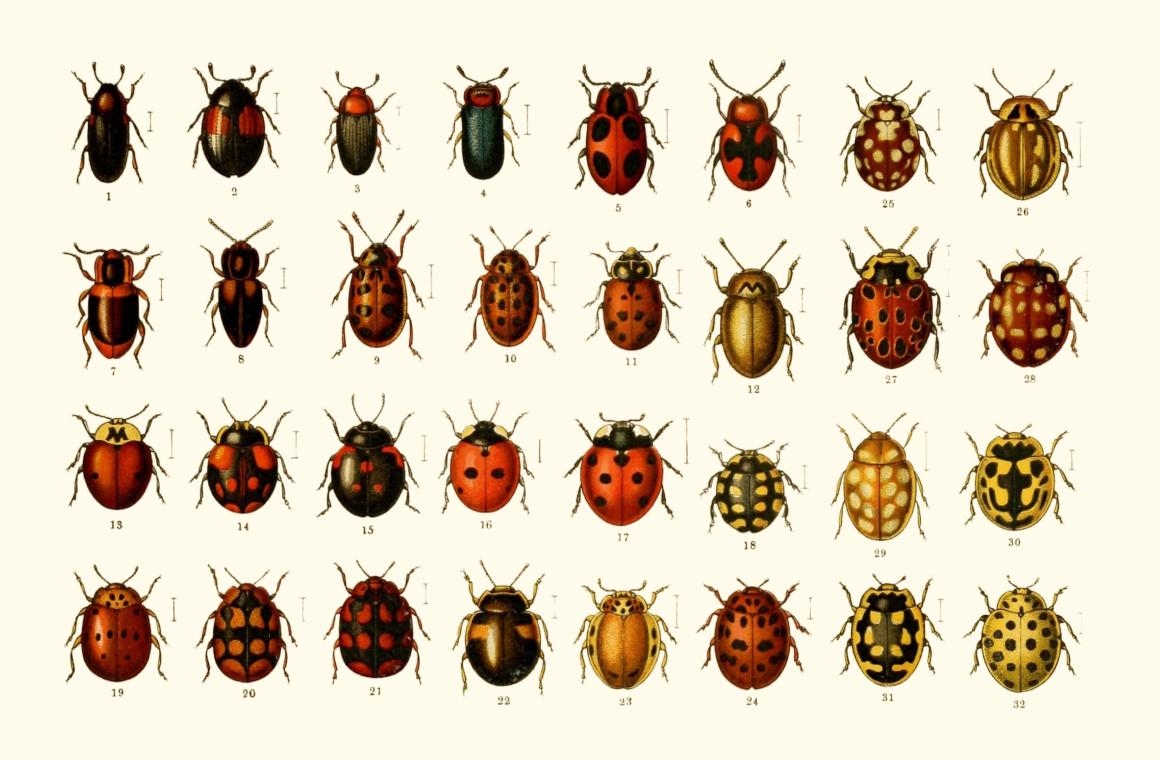
A ship in port is safe, but that is not what ships are built for. Sail out to sea and do new things.
— Grace Hopper (US Naval officer and an early computer programmer)
Bear with me…
In the store rooms of natural history museums all across the world there are drawers of beetles with no labels. A collector once pinned them beautifully, but died and never left a notebook with the corresponding names. Nobody knows where the beetles were caught, when, or by whom.
One could argue that, while the specimen is beautiful to look at, the most important thing was its associated label. A beetle with a label is a piece of data. A beetle with no label is… an ornamental beetle.
Nobody would dare throw the drawer of beetles away. It’s still treasured, and gradually, scientists and researchers work through it, recording what can still be established, piecing together the information they have to hand. Despite all of the knowledge, at the end of the day, one has to accept that some of the beetles will remain a mystery.
So that’s beetles for ya. Anyway, onto email.
At the charity email workshop we ran last month, three separate people asked versions of roughly the same question:
What do you do when you’ve inherited an email list?
One of the attendees had inherited a mailing list of thousands with almost no information about the people on it.
She called it a missed opportunity. But I'd call it an untapped one — the value is still in there, just waiting to be realised.
Today we’re diving in to how might we take advantage of this otherwise lost opportunity, to help you build a strong audience, and do so without messing up or falling foul of compliance.
Step 0: Don't start by deleting
Your instinct might be to prune immediately — to delete the whole inherited list out of fear or uncertainty, or to eliminate as many as possible as quickly as possible.
Resist it for now — deletion is the one step we can't undo.
And we’re about to find out that some of the people on that list, who are otherwise silent, are actually our best supporters.
Get the list somewhere you can manage it — a spreadsheet app like Excel is likely fine for this unless your list goes into the hundreds of thousands. In which case, reply and let me know — there are many options.
Step 1: Establish what they've already done
Your platform already knows who opened and clicked recent campaigns.
Split the list based on this to start with — engaged in the last year, or not — and tag both sides.
That is already a valuable segmentation exercise, arguably worth more than a lot of the additional demographic data organisations collect deliberately.
With engagement, you want to weigh clicks as more important than opens: to start with, they are of course higher intent.
In addition, open rates have been declining in reliability since various inbox providers like Apple’s Mail app started pre-loading images. These days, an "open" is often a machine, not a person. And in some inboxes, a real open is not tracked at all.
While there are exceptions, a click is much more likely to be a human action that can be trusted.
This works in any email marketing tool. It takes twenty minutes and it gives you a better understanding of your real audience, which is usually a smaller and much more realistic number than the one most tools highlight on their dashboard. (You don't need 50,000 subscribers to segment covers where to take this next.)
Step 2: Establish what you already know about each contact, that currently lives somewhere else
You are probably sitting on many disparate data sources that could give you a much higher resolution picture of your audience.
You could have donation records, transactions, event attendance, membership renewals, a volunteer rota, and the spreadsheet from the raffle in 2024. Most marketers struggle to get around to joining these different data sources with their mailing list.
Don’t be afraid — it’s easier than it might seem.
Export the records you have from the tools you know about. Match them up based on email address. Re-upload as a CSV with one extra column to categorise and keep track of where they came from — it could be tags like donor, attended-event, volunteer — and your email platform should track the matches on import.
While it is better to fully integrate things, you don’t need to be blocked. By approaching it like this, there’s no integration work, no data team to ask, and no budget to request.
It could take an afternoon, and your unlabelled drawer suddenly is looking a little more labelled.
Step 3: Ask them
Chances are, the majority of your audience are still blank — you have email addresses and little else.
A beautiful feature of email is that it’s a two-way channel. Much like “Who Wants to be a Millionaire?” you can ask your audience questions.
You could send a one-off short email with three or four one-click options for people to self-categorise. The answers can give you better quality data than anything you'd have inferred. And every click is also a person confirming they want to be there.
Ask just one question, and no more. As we touched on recently, don't overdo it with CTAs and buttons.
Step 4: Then (and only then) initiate the sunset
Now you can start to remove people.
You might want to send a final “goodbye” email first.
It could be something like:
Subject: Still want to hear from us?
We're tidying up our list, and we’d rather not email people who no longer wish to hear from us.
Want to stay informed and keep receiving emails from us? Click the following button:
Keep me on the list
If you don't do anything, we’ll take you off the list in two weeks. No hard feelings, and thank you for choosing to be here in the first place.
There’s a lot of psychology around the impact of emails like this — you’re giving people a final, irreversible choice. You’re pulling on people’s inherent aversion to loss. So that final email may trigger the most engagement of all.
After this, crucially, you actually need to remove the people who don't answer.
This can feel optional, but it’s an important part of being responsible in life more generally: do what you say you will do!
And to some, it may feel like failure: deleting contacts and watching your list shrink feels like going in reverse.
But as we have discussed before, an unsubscribe is not a bad outcome, and keeping your list highly engaged and focused — if a little smaller — is no bad thing.
Gmail and Yahoo both expect bulk senders to keep spam complaints under 0.3%. That’s three complaints in a thousand. Spam complaints come overwhelmingly from people who forgot they signed up in the first place.
Every stale contact you have in your audience is a small chip against the deliverability of everyone else on the list. In your best subscribers might not be receiving your emails we explain the longer version of why that is.
Why now? I am busy right now…
There is never a great time to faff about with manual customer data tasks and chores — it’s always easier to delay stuff like this and put it off.
If I were to give you one reason (or excuse?) to tackle it sooner rather than later: December is always a busy time.
Not just because of Christmas (I’m sorry to be mentioning the C word in September, I really am). If you’re a charity, Giving Tuesday is on 1st December. And then, before you know it, we’re in the new year.
December is just ten weeks away, and your sender reputation can take a while to recover — likely over months and multiple campaigns.
So a list you tidy in late November is better than nothing, but you won’t see the results immediately, and it’s cutting into what is likely your busiest period for planning and sending.
Try it now
There’s a lot here, and it’s precious data, so you don't need to do all three steps at once. Start with just step one and see how you get on.
Build a segment of everyone who has clicked anything in the last twelve months, and jot down two numbers: the size of your list, and the size of that segment.
That second number is what will become your actual audience figure. Everything else gets less scary once you know it.
As always, if you want a second pair of eyes, or have questions (or have any horror stories) hit reply and tell me all.
Until next time,
James
This week's illustration comes from Calwers Käferbuch (Stuttgart: E. Schweizerbart, 1916), digitised by the Smithsonian Libraries and made freely available by the Biodiversity Heritage Library. Public domain. Many beetles, arranged neatly into rows, each one numbered separately from their names. While the collector actually wrote their names down separately, I kept them absent this week to align with the whole point of today's issue. If you would like to receive a list of 36 beetle names in Latin, please reply and I will gladly send them your way.
The newsletter for purpose-driven marketers
Join hundreds of marketers getting weekly insights on ethical email marketing, sustainable growth, and responsible digital practices.
Unsubscribe anytime. No spam. No nonsense.