5 tips to craft emails people actually read
Simple principles, with examples, for emails that get opened, read, and clicked.
 James
JamesThe details are not the details. They make the design.
— Charles Eames (American designer, architect and filmmaker)
As we explored last week: ethical marketing doesn’t mean ineffective marketing.
A great email gets opened, read, and acted on. The difference is how you achieve that.
No messing about this week — we’ve covered a lot on values and philosophy, so I felt it was time for a practical issue.
Here are five principles we’ve seen consistently work, with examples for each.
Reply to let me know what you think!
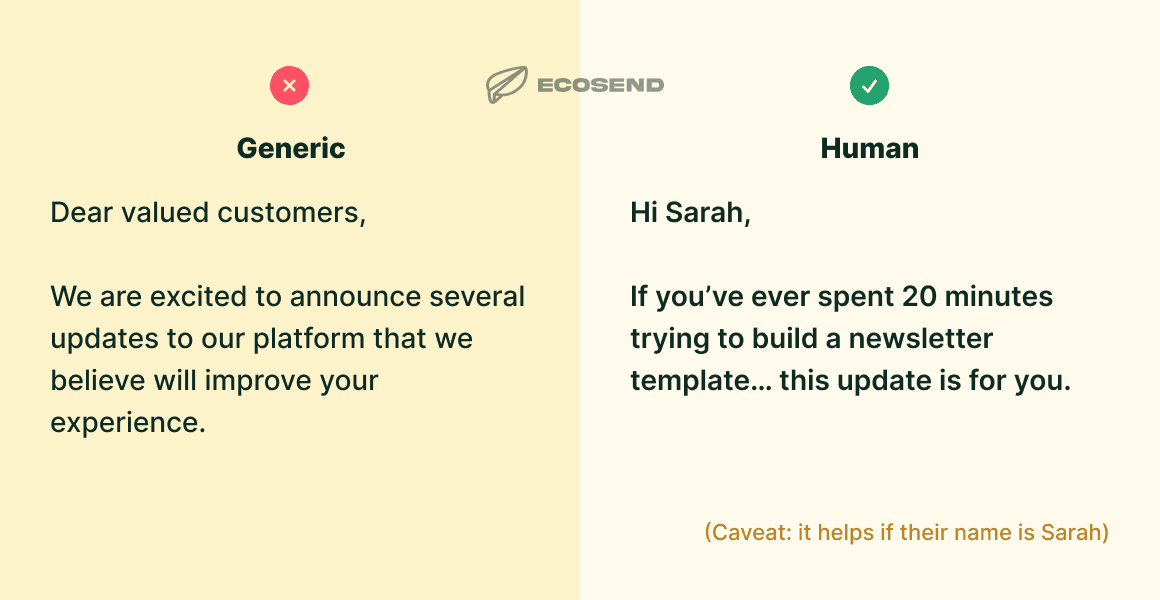
1. Write for one person, not a list
The fastest way to make an email feel generic is to imagine thousands of readers. Instead, picture one real person — someone you know. Someone like your ideal customer.
Write the email to them.
Your tone becomes clearer, warmer, and far more human.
2. Make the first line earn the second
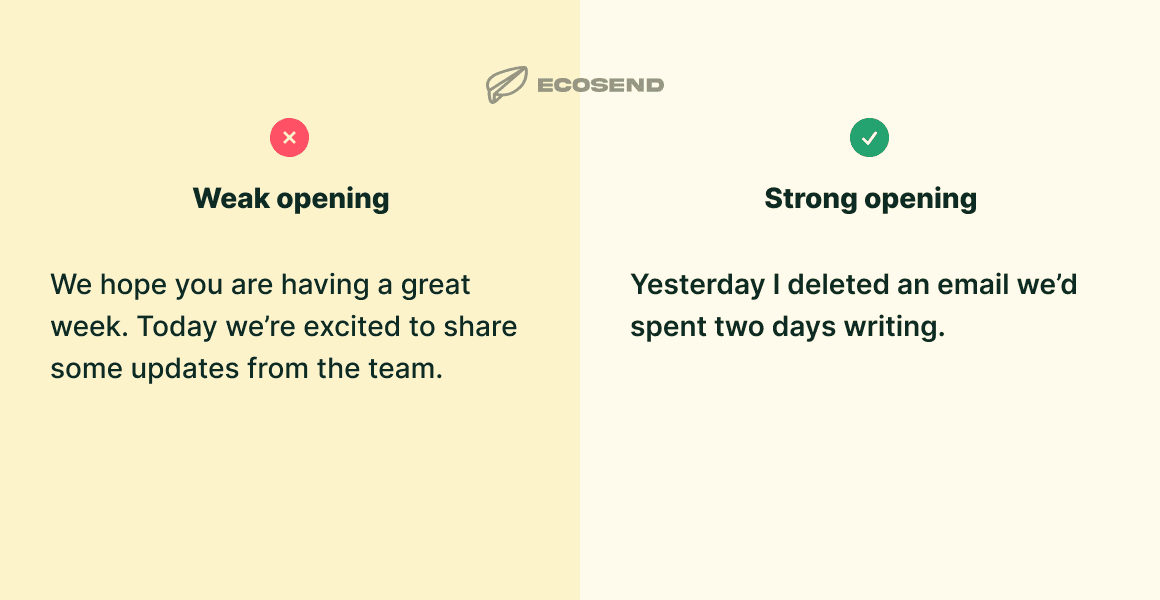
Getting an open is only half the job.
The first sentence decides whether someone keeps reading or closes the email. Avoid long intros and corporate language.
Start with something concrete, surprising, or relatable.
And then watch as people read on, driven by curiosity.
3. Say one thing well
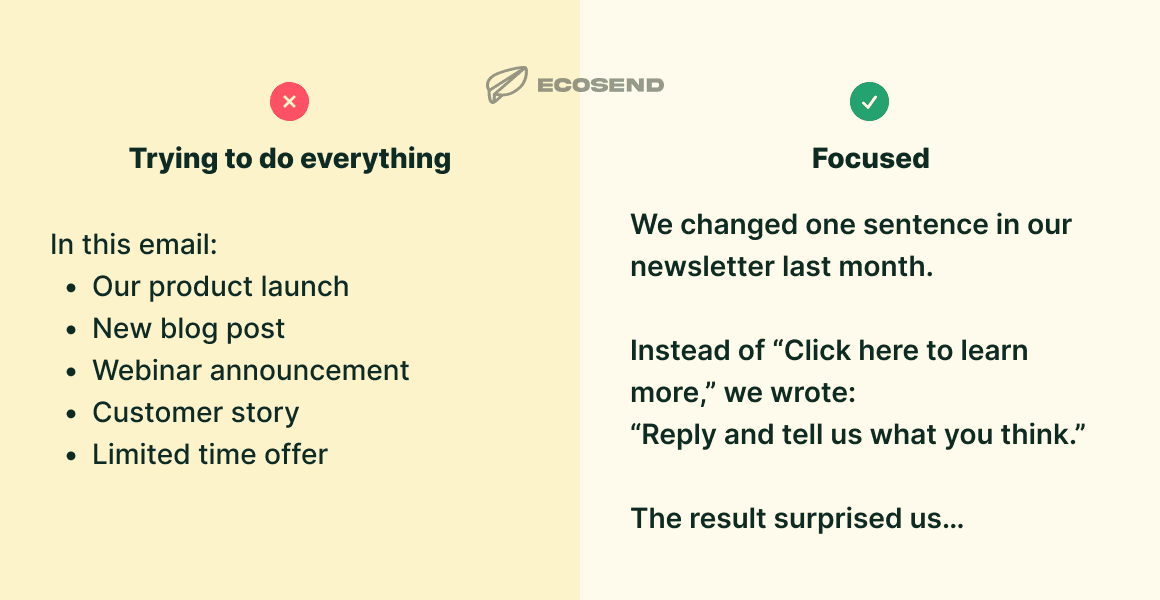
Many marketing emails try to do too much.
One announcement. Three updates. A product launch. A webinar. A blog post.
The result is usually that nothing lands. Or if the email is received positively, it’s hard to know why. We tend to find the best emails focus on a single idea and make it easy to act on.
One idea. One outcome. One CTA.
4. Respect your reader’s time
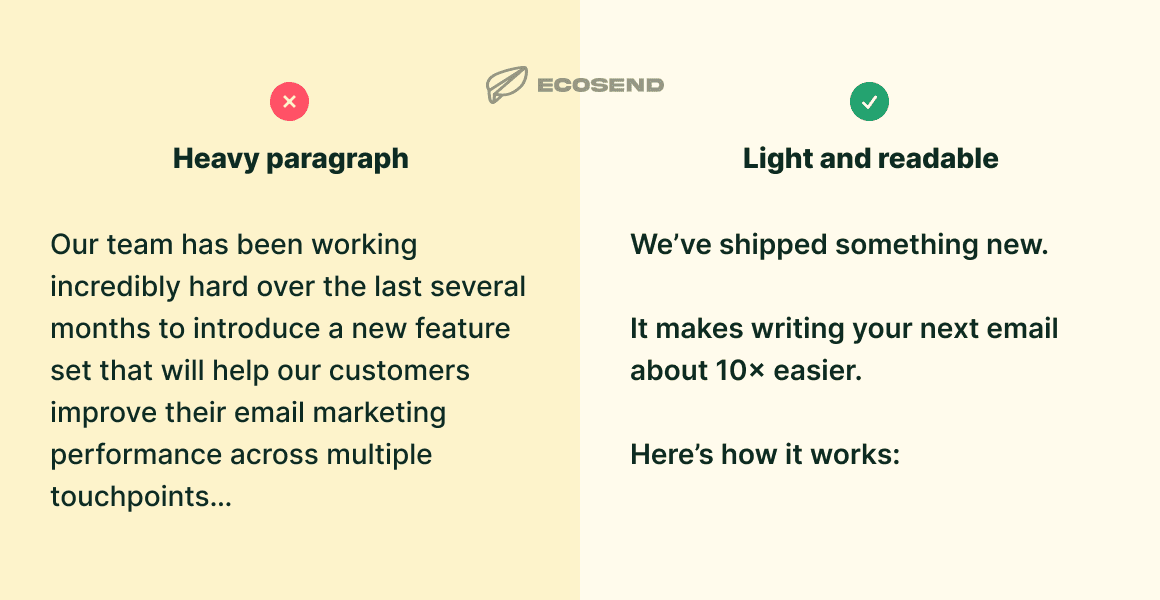
People don’t resent marketing emails. They resent wasted time.
Edit ruthlessly.
Shorter sentences. Fewer paragraphs. Make the most of headings to signpost the reader. Remove anything that doesn’t help the reader understand or act.
Good emails are scannable and feel light to read.
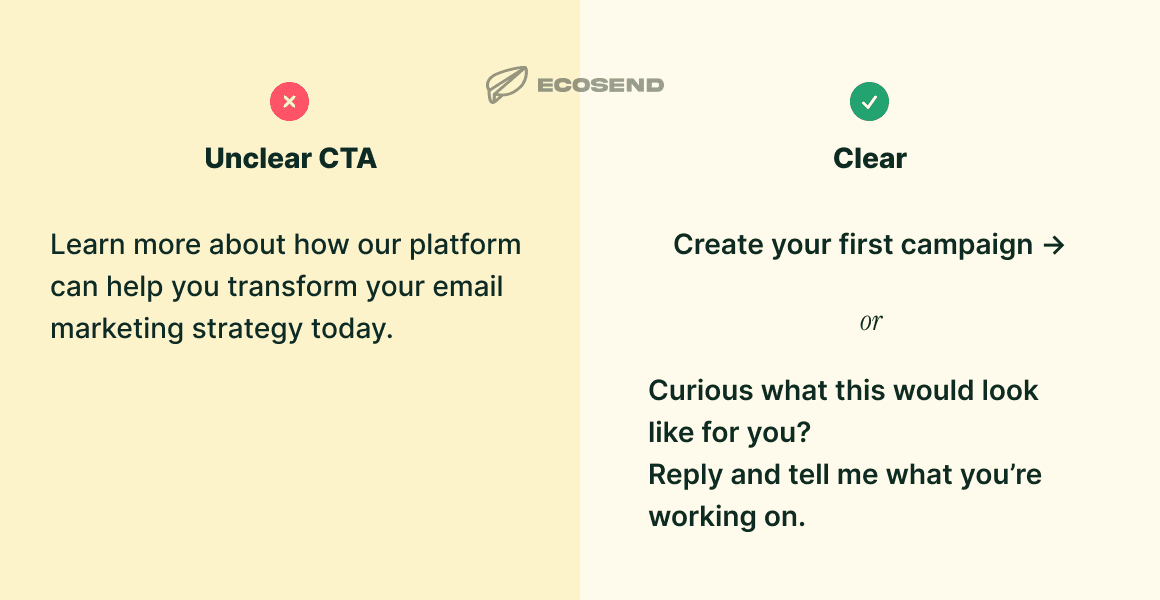
5. Make the next step obvious
If someone achieves the mighty task of reading your email, they shouldn’t have to think about what to do next.
One clear call to action is usually enough. Whether it’s reading more, trying a product, or replying — make the next step simple and visible.
The reader should never have to think about the next step.
Bonus tip: Write the email like you’d send it to a colleague
OK the bonus tip is to underpromise and overdeliver, so here’s another one for you… 😉
One of the easiest ways to improve your emails is this:
Write the first draft as if you’re sending it to a colleague.
Not to “your list”.
Not to “your customers”.
Just to someone you know.
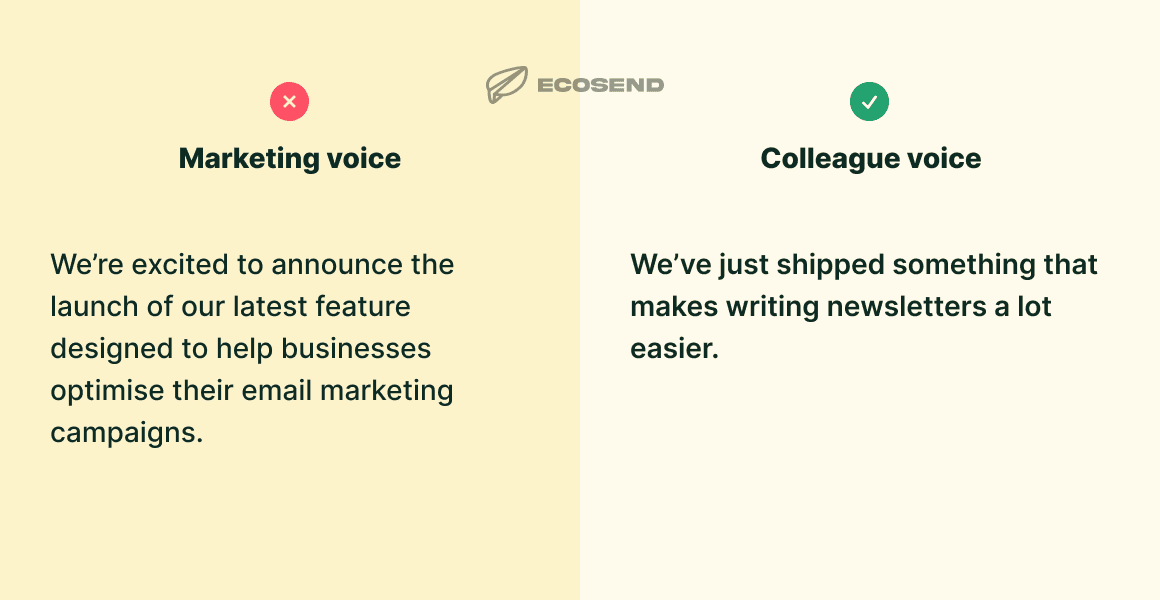
You can tidy the language afterwards if you want.
But starting in human mode almost always produces better emails than starting in marketing mode.
None of these techniques rely on manipulation — they rely on clarity, empathy, and respect for the reader.
I wouldn’t be following my own advice if I didn’t give you a clear call-to-action: hit reply and let me know if you’ve got a principle you stick to that we haven’t covered here. I’m always fascinated to hear about the weird and wonderful ways people create great work.
Enjoy B Corp Month!
The newsletter for purpose-driven marketers
Join hundreds of marketers getting weekly insights on ethical email marketing, sustainable growth, and responsible digital practices.
Unsubscribe anytime. No spam. No nonsense.