Styleguide
This styleguide gives a clear idea of EcoSend’s personality and how to present EcoSend to the world. This guide outlines our tone of voice and rules for copywriting.
Even though there may be dozens of people working hard to build EcoSend, we should always speak with a consistent voice.
Favour classy over cute. Act more like a human and less like a computer.
Copy rules
The one place to look up common words and terms we use.
Automation
When referring to the specific automation functionality of EcoSend, refer to this as Automation with a capital A. When discussing the topic of “marketing automation” in general do not capitalise.
Contacts
When referring to the specific area of the EcoSend platform for managing your contacts and audience, we refer to this as “Contacts” with a capital C. When referring to individual contacts or contacts in a more general sense, we do not capitalise.
EcoSend
Our name, always to be capitalised with the first E and the S. One word.
Forms
When referring to the specific feature of EcoSend, refer to EcoSend Forms, or Forms for short. When referring to generic website forms, or third party form builders, do not capitalise.
Go Squared Ltd.
Our registered company name. Never use this unless it is specifically required for official documents or legal reasons. Note: "Go" and "Squared" are separated by a space in the legal name. Always favour our brand name "GoSquared" over the legal name in marketing materials.
Message Composer
When referring to the specific area of the EcoSend platform for creating emails, we call this the Message Composer. Do not capitalise “Message” or “Composition” in other contexts.
Quarter / Q1, Q2, etc.
While it’s customary to refer to “quarters” in business, we prefer to refer to the seasons — a concept grounded in nature rather than finance and business. We roughly assign each “quarter” to a season:
- Q1 (January to March): Winter
- Q2 (April to June): Spring
- Q3 (July to September): Summer
- Q4 (October to December): Autumn
Other rules
Breaking the rules
It’s sometimes OK to break the rules. It just usually helps to know the rule you are breaking and to do it intentionally.
British English
By default we write in British English. Especially if using AI to assist with written content creation, be sure to watch out for stray “z”s slipping in.
Capitalisation
- You should avoid the incorrect or random use of capital letters to convey impact. Beyond the standard rules for capitalisation in English, only EcoSend brand names as highlighted above should be capitalised.
Hyphens and dashes
- Hyphen: looks like this: -. Just use
-in HTML. Used for joining strung-together words. Also used as a minus sign for negative numbers. - En dash: looks like this: –.
–in HTML. Used to signify ranges like 0–9 and A–Z. - Em dash: looks like this: —.
—in HTML. Used to denote a break in a sentence or parenthetical statements. Technically so can an en dash, but for consistency we use em dash everywhere. Also used for attributing quotes. Except when attributing quotes, em dashes should always have a space either side of them.
Oxford comma
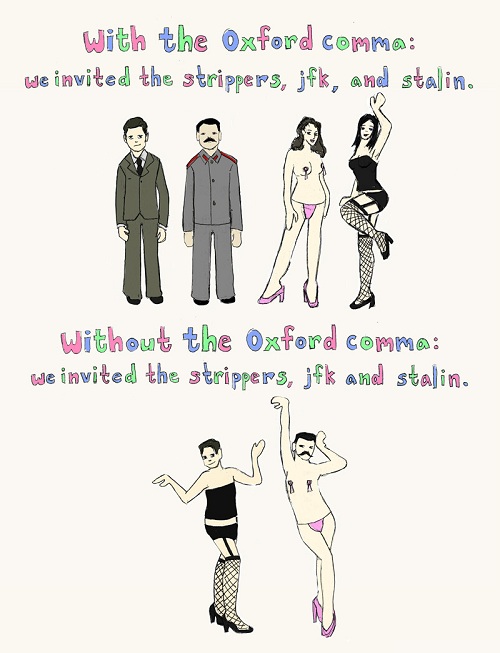
The comma before the connective at the end of a list (Thing A, Thing B, and Thing C). We like Oxford commas, use them wherever appropriate. Especially when it makes a semantic difference to the meaning.
Last updated July 2026