Mailchimp to EcoSend Dictionary
Making the switch from Mailchimp? This handy guide helps you understand the terminology differences between Mailchimp and EcoSend. While a few terms may need to be relearned, you'll be up and running in no time with EcoSend's intuitive and helpful interface.
For a full comparison of features, pricing, and values, see why EcoSend is the perfect Mailchimp Alternative.
Campaigns -> Broadcasts
In Mailchimp, you'll be familiar with using Campaigns to send out single-shot email campaigns, such as newsletters, product promotions, and event invitations. In EcoSend, these work in almost exactly the same way, they're just called Broadcasts.
In EcoSend, you can craft beautiful emails with our email builder, and be ready to send your campaign within minutes. You can also schedule your Broadcast to go out at the perfect time.
Keen to bring your existing Mailchimp templates with you? We'll help you move them across.
Automations & Journeys -> Automated Messages & Sequences
These features, designed to set-up automated email campaigns, are great for onboarding new contacts, or creating lead magnets.
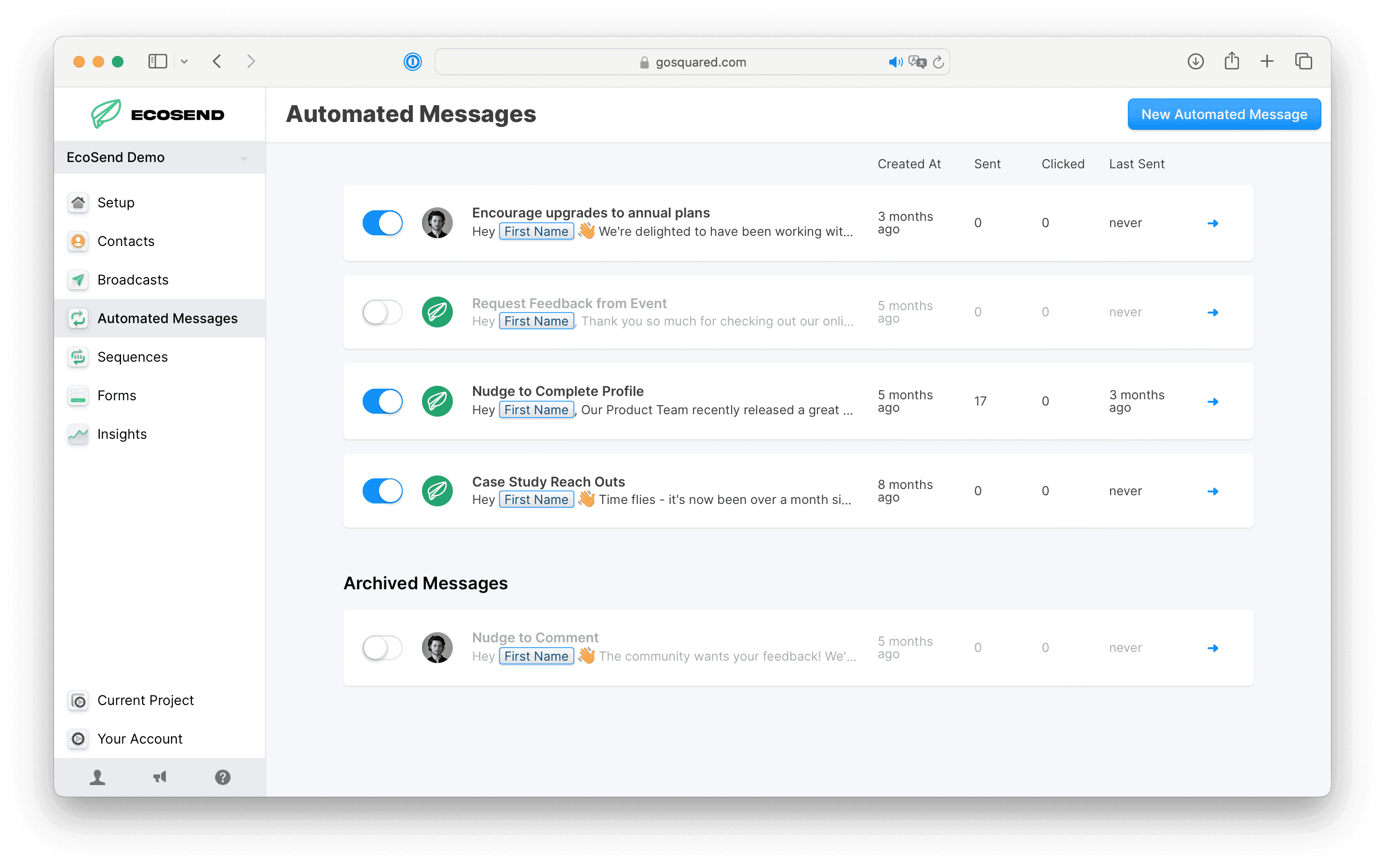
In EcoSend, an automation that sends a single email (like a welcome email) is an Automated Message. A Customer Journey with multiple emails sent over time is a Sequence.
Whether it's a one-off welcome email you're after, or a sophisticated nurture series, you can find it all in EcoSend.
Audiences -> Contacts & Lists
An audience in Mailchimp is the home of your email addresses, where you collect and review all contacts who have signed up to receive emails from your company.
In EcoSend, you will find all of your contacts in the Contacts area. You can optionally break your audience out into Lists, and give your contacts the option of which emails they receive with Subscription Preferences.
Lists are completely optional in EcoSend. Most customers just starting out don't need them until their audience grows in size and sophistication.
If you haven't imported your contacts from Mailchimp yet, check out how to migrate from Mailchimp to EcoSend. If you have more than one audience in Mailchimp, you can import each one in turn. Would rather not do it yourself? Our team will move everything across for you with our free migration service.
Segments -> Smart Groups
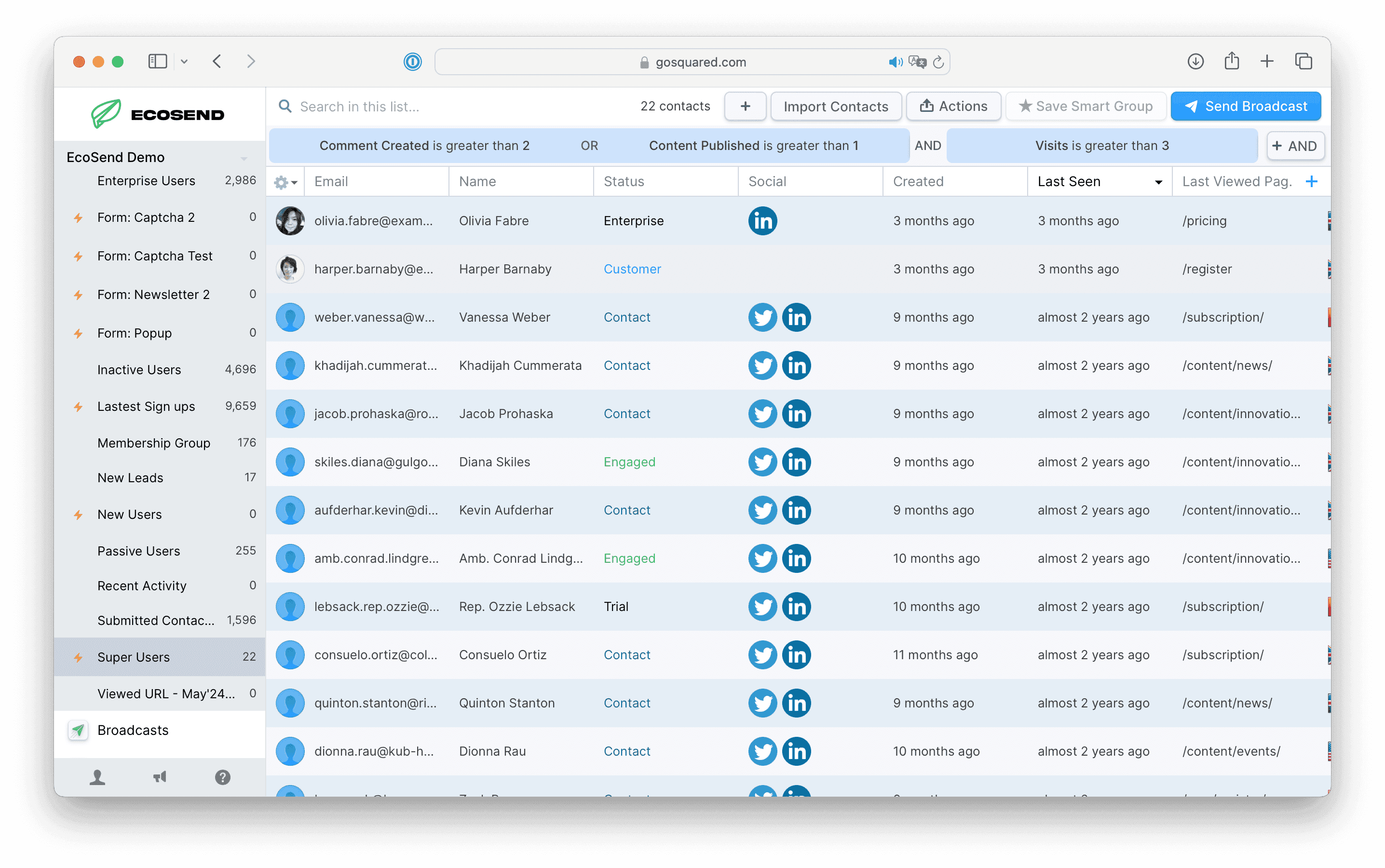
Within Contacts, you can segment your contacts into Smart Groups. Smart Groups are an incredibly powerful and flexible way to build highly specific groups of contacts that you may wish to send one-off campaigns or build automations for.
Smart Groups update in real time, so contacts are added and removed automatically as they match your filters. You can filter by properties, events, and email activity, such as who opened your last Broadcast or clicked a particular link.
Smart Groups can also be used to trigger Automated Messages and Sequences, so you can send highly targeted emails to just the right people.
Tags & Audience Fields -> Properties
Tags are an important feature in Mailchimp, allowing you to segment your users into smaller lists. Audience fields store extra information about each contact, such as their name, company, or birthday.
In EcoSend, both of these become Properties. When you import your contacts from Mailchimp via the EcoSend Importer, you choose which fields to bring across and how they map to properties. Each contact's tags will be created as custom properties, and associated to the relevant profiles.
Each contact's subscription status in Mailchimp is saved on the Mailchimp Subscriber property, so you can easily filter for contacts who were subscribed or unsubscribed.
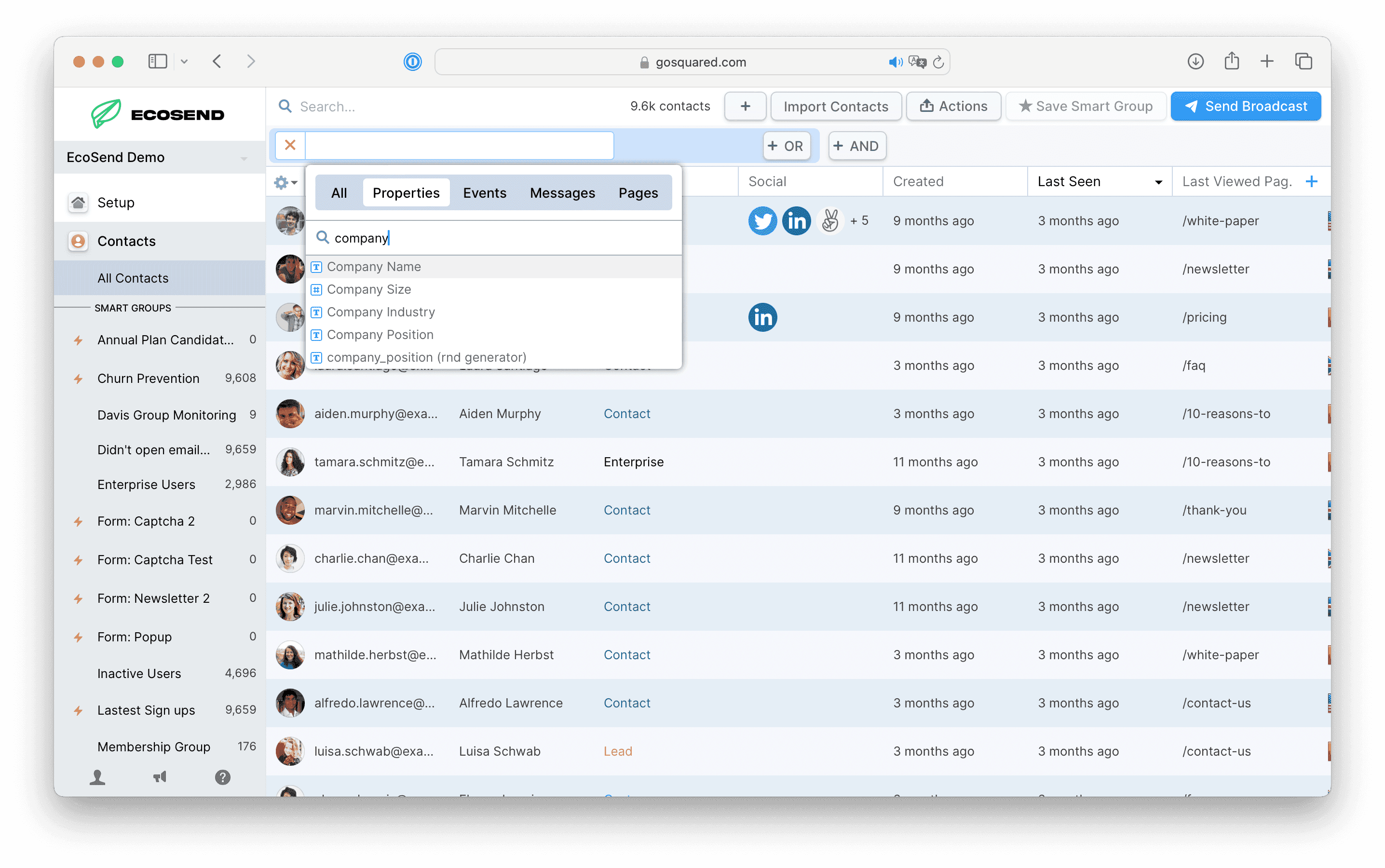
You can find all of your properties by heading to Contacts, then Add Filter, then searching for the tag or field name in the Properties tab.
You can then use this to build out and save a Smart Group, in order to segment your audience according to their relevant properties.
Watch our video walkthrough on migrating from Mailchimp to EcoSend.
Saved Templates -> Custom Templates
In Mailchimp, you might save your favourite designs as templates to re-use in future campaigns. In EcoSend, these are called Custom Templates.
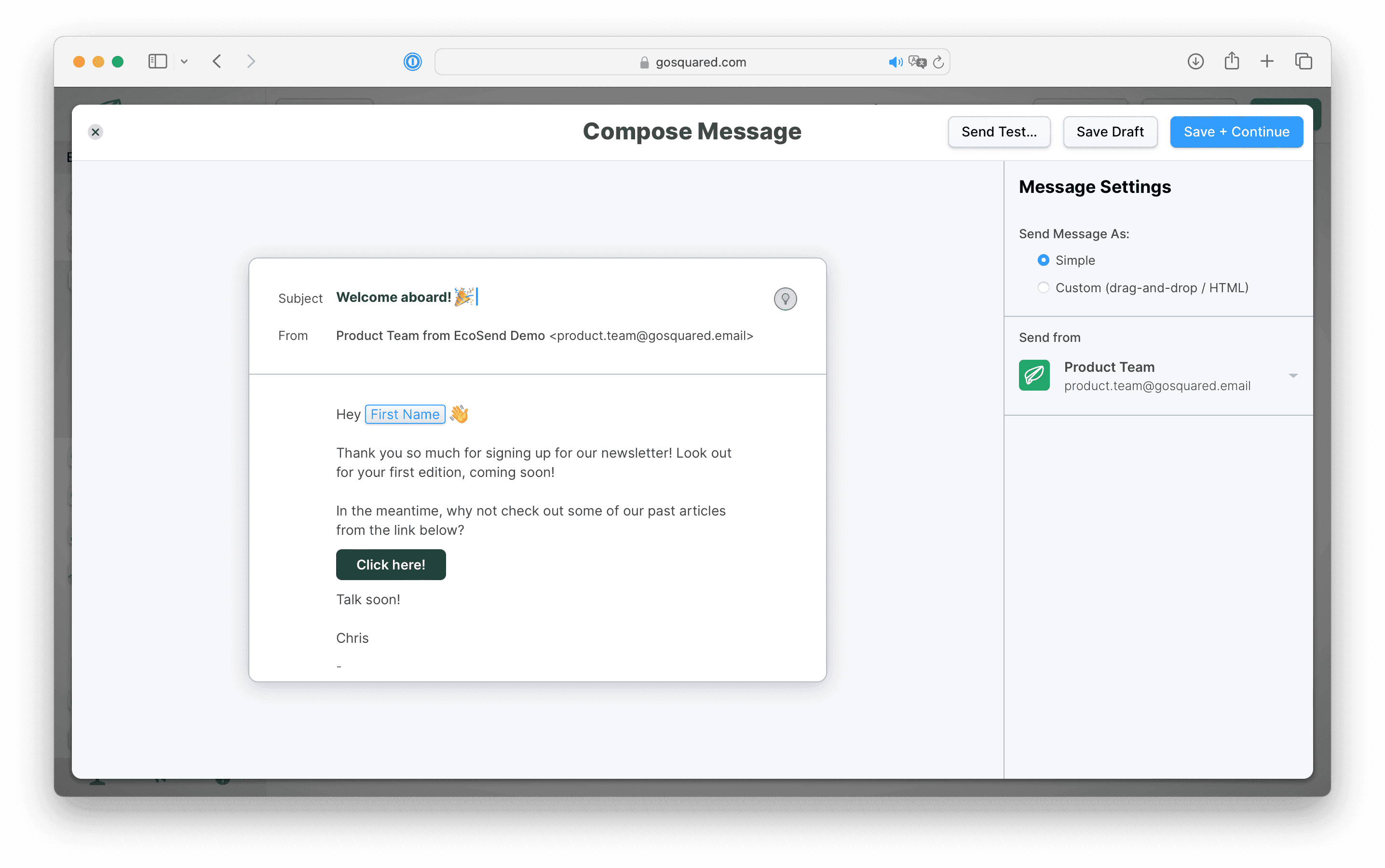
To create one, design your email in the email builder and click Save as Template. Your template will be ready to use in your Broadcasts, Automated Messages, and Sequences, and you can edit it whenever you need.
Merge Tags -> Variables
In Mailchimp, you personalise emails with merge tags like *|FNAME|*. In EcoSend, these are called Variables.
To add a Variable to your subject line or preview text, type {{ to bring up the Variable picker. Any property you've imported can be used as a Variable.
If you're copying content over from Mailchimp, remember to swap any old merge tags for EcoSend Variables before you send.
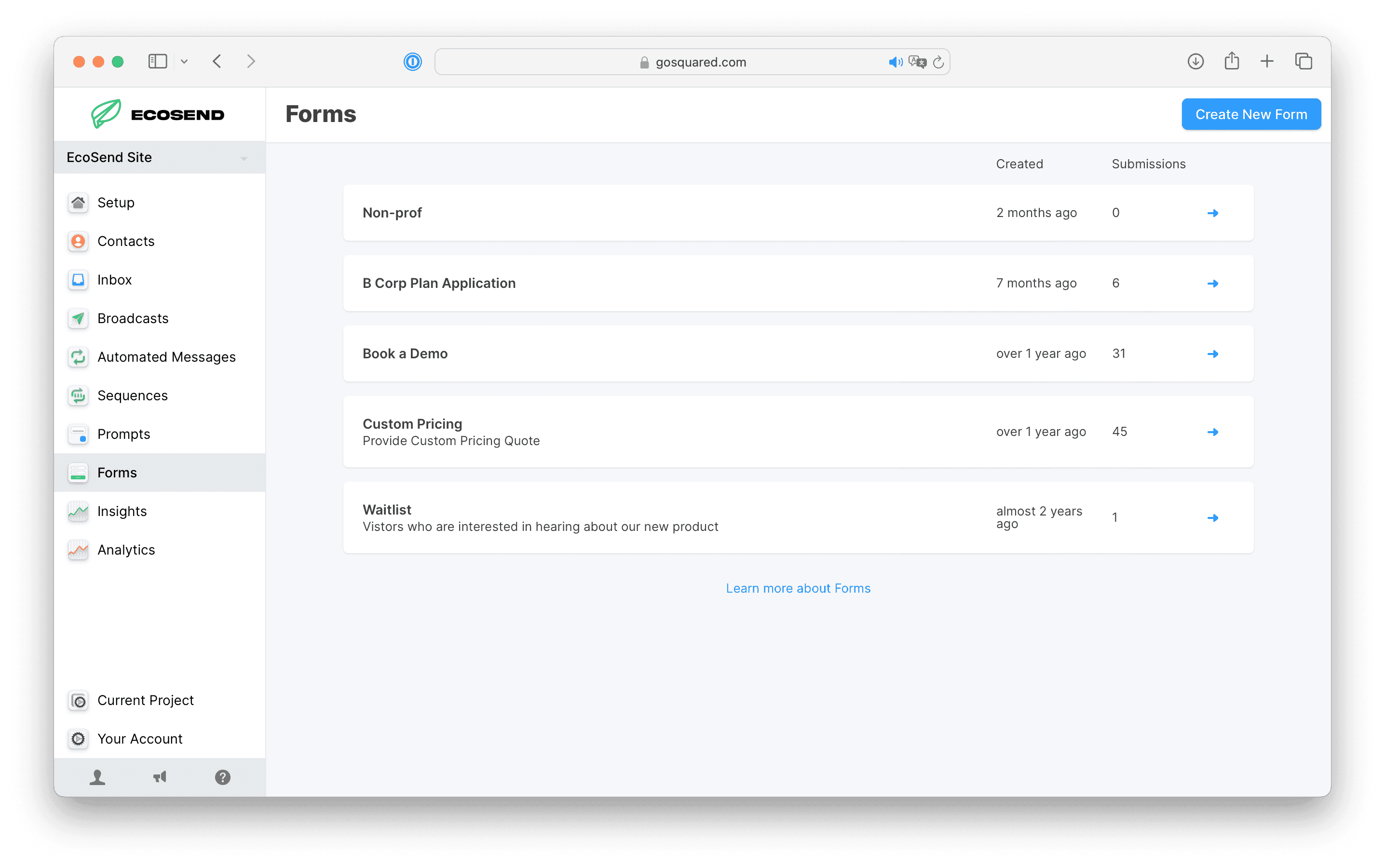
Forms -> Forms
This one you won't need a translation for! EcoSend Forms allow you to capture email addresses and grow your user-base.
- Mailchimp embedded forms are Inline Forms in EcoSend.
- Mailchimp pop-up forms are Pop-up Forms.
- If you used a Mailchimp hosted signup form or landing page as a simple sign-up page, a Hosted Form gives you a shareable link without needing a website.
You can also use Forms as the basis for triggering Automated Messages, to create fluid marketing funnels.
Analytics -> Insights
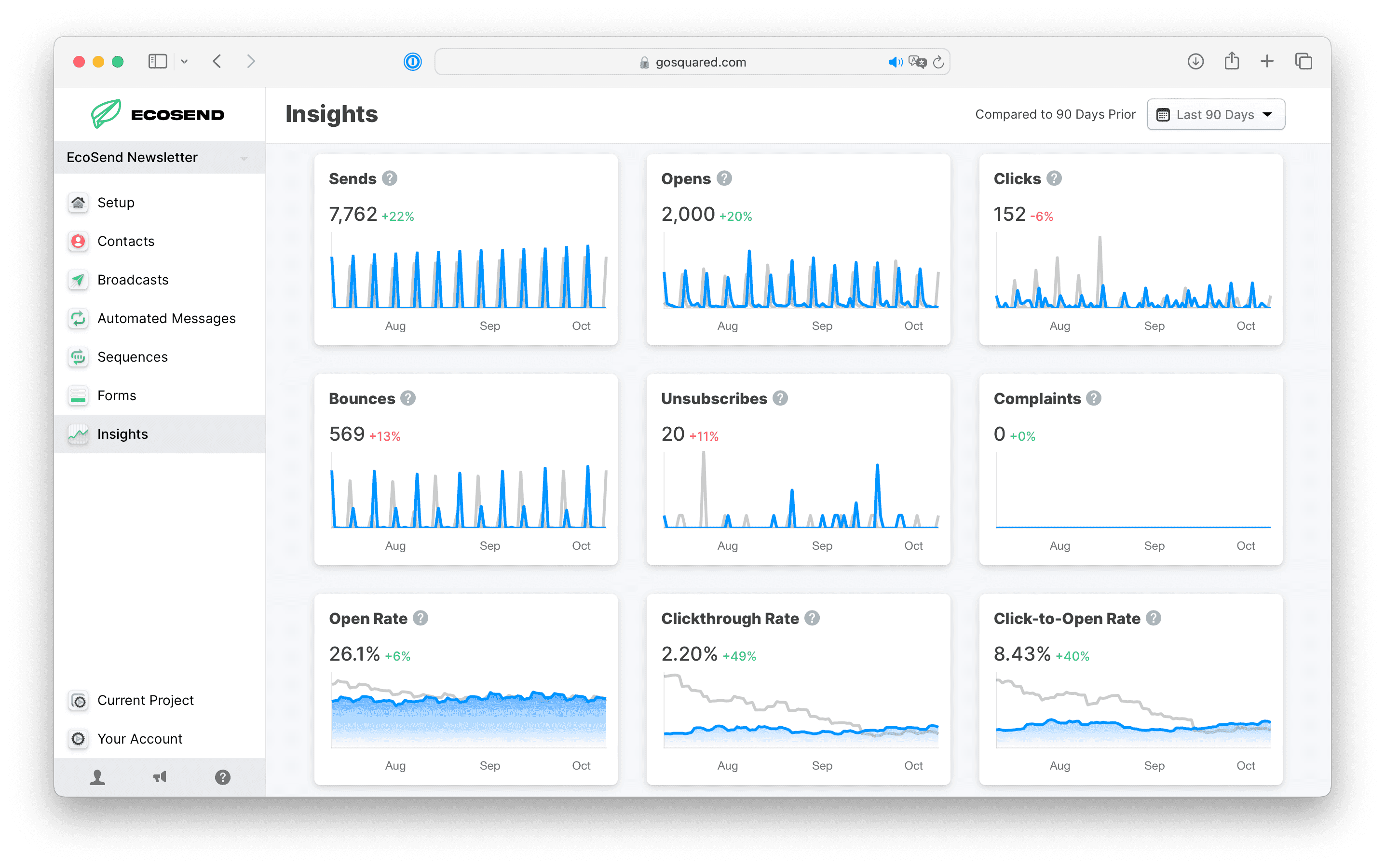
You'll find a dedicated Insights dashboard where you can monitor key metrics across all your campaigns.
Whether it's your Click-Through Rate, Bounce Rate, Unsubscribe Rate or other, you can find it all here! You can also dig into the results of any individual Broadcast with Broadcast metrics.
We hope you find this guide helpful! 🙌
As always, if you have any questions regarding migrating from Mailchimp, or activating EcoSend features, please reach out to our friendly team.
Last updated November 2026